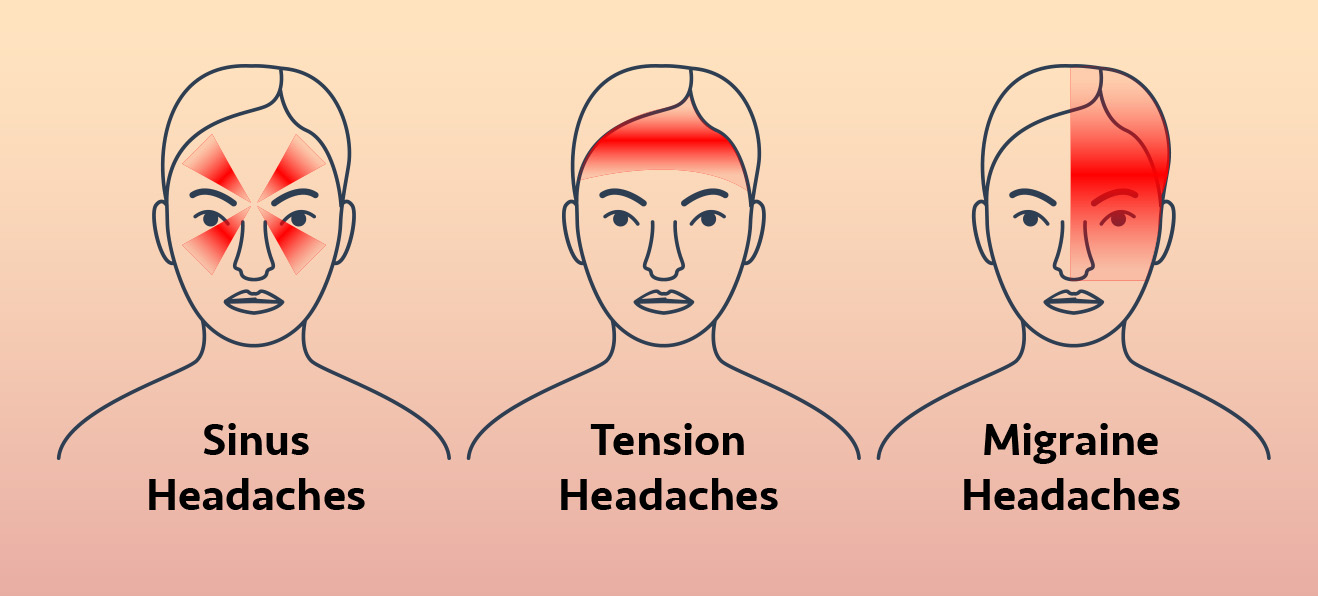
Pain in your forehead, cheekbones and nose. The pain is worse in the morning.
Increased pain when you bend over or touch your face.
Stuffy nose.
Tension or Muscular Headaches
A dull ache in your forehead, above your ears, or at the back of your head.
Pain in your neck or shoulders.
Migraine Headaches
One side of your head hurts more than the other.
You feel sick to your stomach or vomit.
Light hurts your eyes. Noise bothers you. The headache is worse with activity.
After the headache, some people have a drained feeling with tired, aching muscles; others feel great.
Migraines can occur with or without an aura. With an aura, spots or flashing lights or numbness occur 10 to 30 minutes before the headache. About one-third of all migraines occur with an aura.
Certain things trigger migraine headaches:
Changing hormone levels, menstruation.
Use of birth control pills or the patch.
Change in sleeping patterns.
Stress.
Aged cheeses, cured meats, red wines.
Causes
Sinus Headaches
A sinus headache occurs when fluids in the nose aren’t able to drain well and a buildup of pressure occurs in the sinuses. A cold, allergies, dirty or polluted water, and airplane travel can cause a sinus headache.
Tension or Muscular Headaches
Common causes are tense or tight muscles in the face, neck or scalp, reading for long periods of time, eyestrain, stress and lack of sleep.
Migraine Headaches
Migraine headaches happen when blood vessels in your head open too wide or close too tight. They tend to run in families and affect about 25% of women at some time during their lives. They occur more often in women than in men.
Things that may trigger migraines include changing hormone levels, menstruation, birth control pills/patch, stress, change in sleep patterns, and certain foods (aged cheeses, cured meats, red wine).
Other Causes of Headaches
Analgesic rebound from regular or repeated use of over-the-counter or prescribed pain relievers.
Eating or drinking something very cold, such as ice cream. {Note: To prevent ice cream headaches, warm the ice cream for a few seconds in the front of your mouth.}
Caffeine withdrawal.
Low blood sugar, hunger, or sensitivity to certain foods and drinks.
A symptom of a health problem, such as allergies, depression, high blood pressure, dental problems, and a pinched nerve in the neck.
Cigarette smoke, pollution, etc.
Uncorrected vision problems.
Foods and Drinks that May Cause Headaches
Alcoholic beverage, especially red wine.
Aspartame (the artificial sweetener in NutraSweet®).
Bananas (if more than 1/2 banana a day).
Caffeine from coffee, tea, soft drinks, chocolate, or some medications.
Lack of caffeine if abruptly stopped, such as stopping coffee intake.
Citrus fruits (if more than 1/2 cup a day).
Cured meats, such as hot dogs.
Food additives, such as monosodium glutamate (MSG).
Hard cheeses, such as aged cheddar or provolone.
Nuts and peanut butter.
Onions.
Soy sauce and other fermented foods.
Vinegar.
Treatment
Self-care can treat headaches caused by tension, fatigue and/or stress. Certain over-the-counter medicines and prescribed medicines can treat sinus headaches and migraine headaches.
Biofeedback has helped many people who have suffered from headaches.
Headaches that are symptoms of health problems are relieved when the condition is treated with success.
Self-Care / Prevention
Don’t smoke. If you smoke, quit!
Try to stop the headache when it starts.
Take an over-the-counter (OTC) medicine for pain as directed on the label.
Rest in a quiet, dark room with your eyes closed.
Massage the back of your neck with your thumbs. Work from the ears toward the center of the back of your head. Also, rub gently along the sides of your eyes. Gently rub your shoulders, neck, and jaw. Get a massage.
Place a cold or warm washcloth or hot or cold pack, whichever feels better, over the area that aches.
Take a warm bath or shower.
Relax. Picture a calm scene in your head. Meditate or breathe deeply.
Keep a diary of when, where and why headaches occur.
Exercise on a regular basis.
Get enough rest.
Eat 5 to 6 small meals instead of 3 large meals. To ward off low blood sugar, don’t skip meals. Limit eating sweets.
Keep regular sleeping times as much as you can.
When lying down, use a pillow that supports the neck. Sleep on your back.
Avoid scents, foods and beverages that trigger headaches.
For a hangover: after drinking alcohol, take an OTC pain reliever (do not take acetaminophen, such as Tylenol). Eat solid foods. Rest or sleep. Have 2 or more glasses of water before you go to sleep. Drink 2 or more glasses of water when you wake up.
Triage Questions
Question 1
Is the headache linked with a serious head injury or passing out? Or, does the headache occur with severe pain in and around one eye, blurred vision, double vision, slurring of speech, mental confusion, personality change, or a problem moving the arms or legs?