
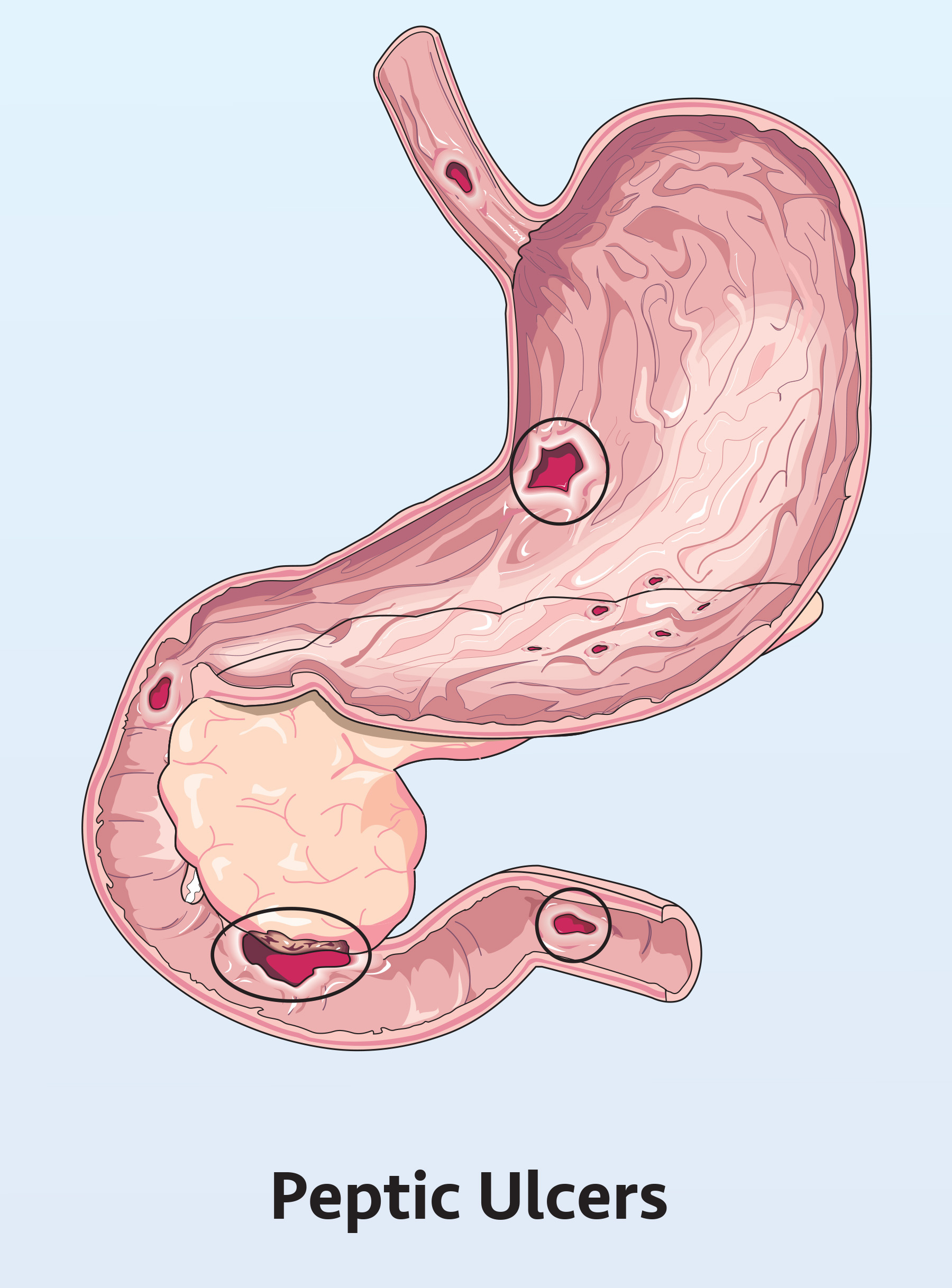
Peptic Ulcers
November 1, 2024
Online Clinic
Digestive & Urinary
A peptic ulcer is a sore on the lining of the stomach or first part of the small bowel.
People are more likely to develop peptic ulcers if they are older adults, had a peptic ulcer before, or if they smoke.
Signs & Symptoms
- A gnawing or burning pain is felt in the abdomen between the breastbone and navel. The pain often occurs between meals and in the early hours of the morning. It may last from a few minutes to a few hours and may be relieved with eating or antacids.
- Feeling uncomfortably full after eating a meal
- Appetite and weight loss
- Nausea or vomiting dark, red blood or material that looks like coffee grounds
- Bloody, black, or tarry stools
- Paleness and weakness if anemia is present
Causes
- An infection with Helicobacter pylori (H. pylori) bacteria. This is the main cause.
- Repeated use of aspirin and other nonsteroidal anti-inflammatory drugs (NSAIDs), such as ibuprofen and naproxen sodium.
Treatment
Treatment includes medicines to treat the cause of the ulcer, such as antibiotics to treat a H. pylori infection. Medicine to heal the ulcer may include stomach acid reducers. Surgery may also be needed.
Self-Care / Prevention
- Eat a well-balanced diet. Include foods high in fiber. There is no need for a special diet or to avoid specific foods to prevent or treat peptic ulcers.
- Don’t use aspirin and other NSAIDs. Follow your doctor’s advice for prescribed NSAIDs.
- Take medications as prescribed.
- Don’t smoke. If you smoke, quit.
- Try over-the-counter antacids or acid controllers (with your doctor’s okay). Use them on a short-term basis. Don’t try to self-medicate an ulcer.