Sore Throats in Children
July 6, 2026
Online Clinic
Children's Health
There are 2 kinds of sore throats:
- Bacterial sore throats usually cause a high fever, headaches, or swollen neck glands. But sometimes children with bacterial sore throats have no other problems. Strep throat is one kind of bacterial sore throat. Antibiotics can help cure a bacterial sore throat.
- Viral sore throats are more common. They may or may not cause the same problems as a bacterial sore throat. You can’t cure a viral sore throat with antibiotics.
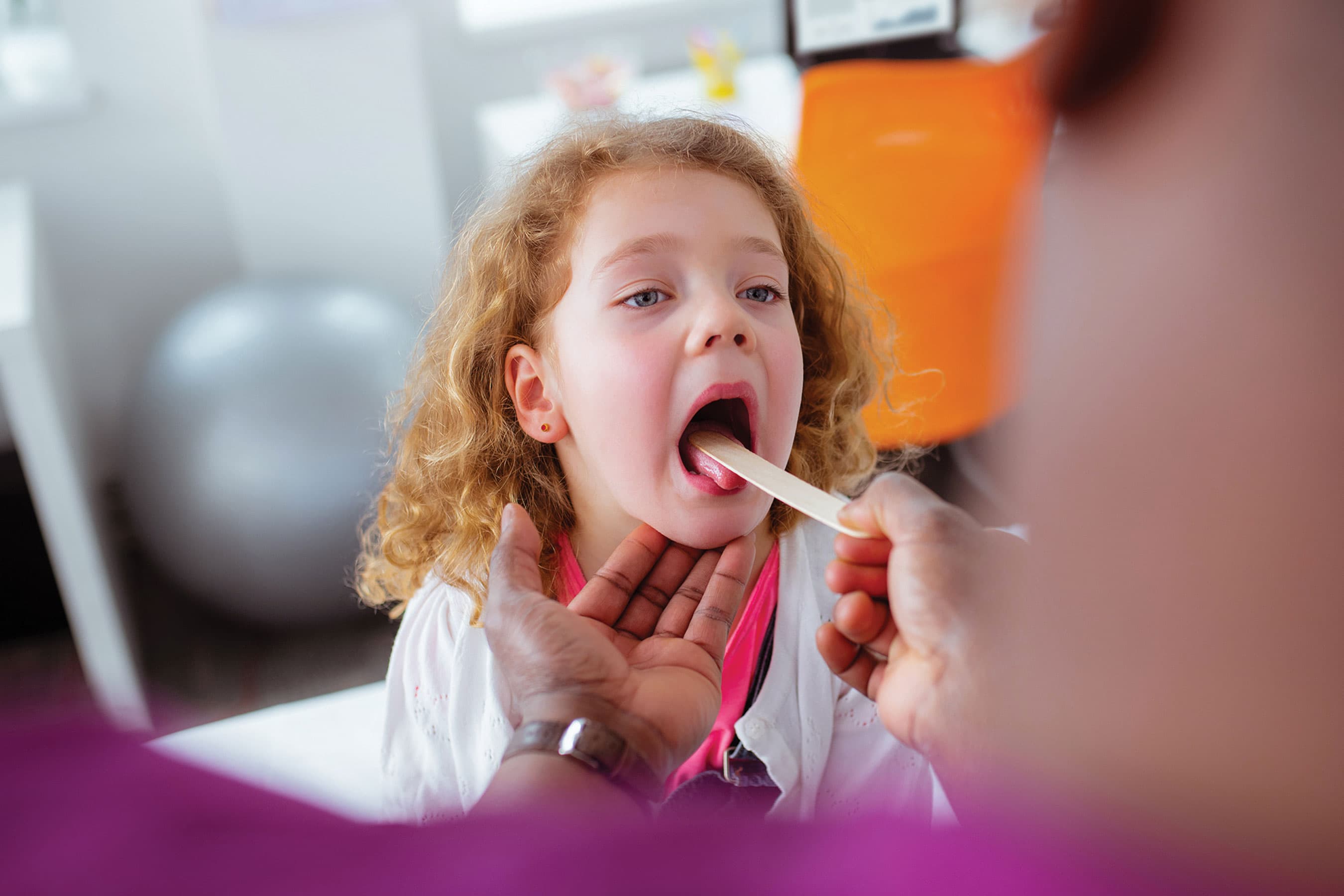
Tonsillitis is when the tonsils are swollen mostly due to infection. This can be viral or bacterial. Take your child to the doctor if he or she has a bad sore throat. Some sore throats that aren’t treated can lead to other problems like abscesses, kidney problems, or rheumatic heart disease. The doctor may take a throat culture to find out what is wrong. The doctor may give your child antibiotics if the sore throat is from strep or some other bacteria.
Self-Care
- Have your child gargle with 1/4 teaspoon of salt in 1/2 cup of warm water. Do this every few hours. Only do this with children over 6 years old.
- Give your child warm drinks like caffeine-free tea and soup.
- For strep throat, give cold foods and liquids, like popsicles and frozen yogurt.
- Use a cool-mist vaporizer in the room where your child spends most of the time. Use distilled (not tap) water.
- Feed your child foods that are soft and/or cold and easy to swallow. Don’t give spicy foods.
- Have your child suck on a piece of hard candy or a cough drop if 5 or more years old.
- For pain and fever, give your child acetaminophen or ibuprofen. Make sure to give the right kind and dose. (Note: Do not give aspirin. Aspirin and other medicines that have salicylates have been linked to Reye’s Syndrome.)
- Do not use throat sprays with benzocaine for children younger than 2 years. For older kids, check with their doctor before using.