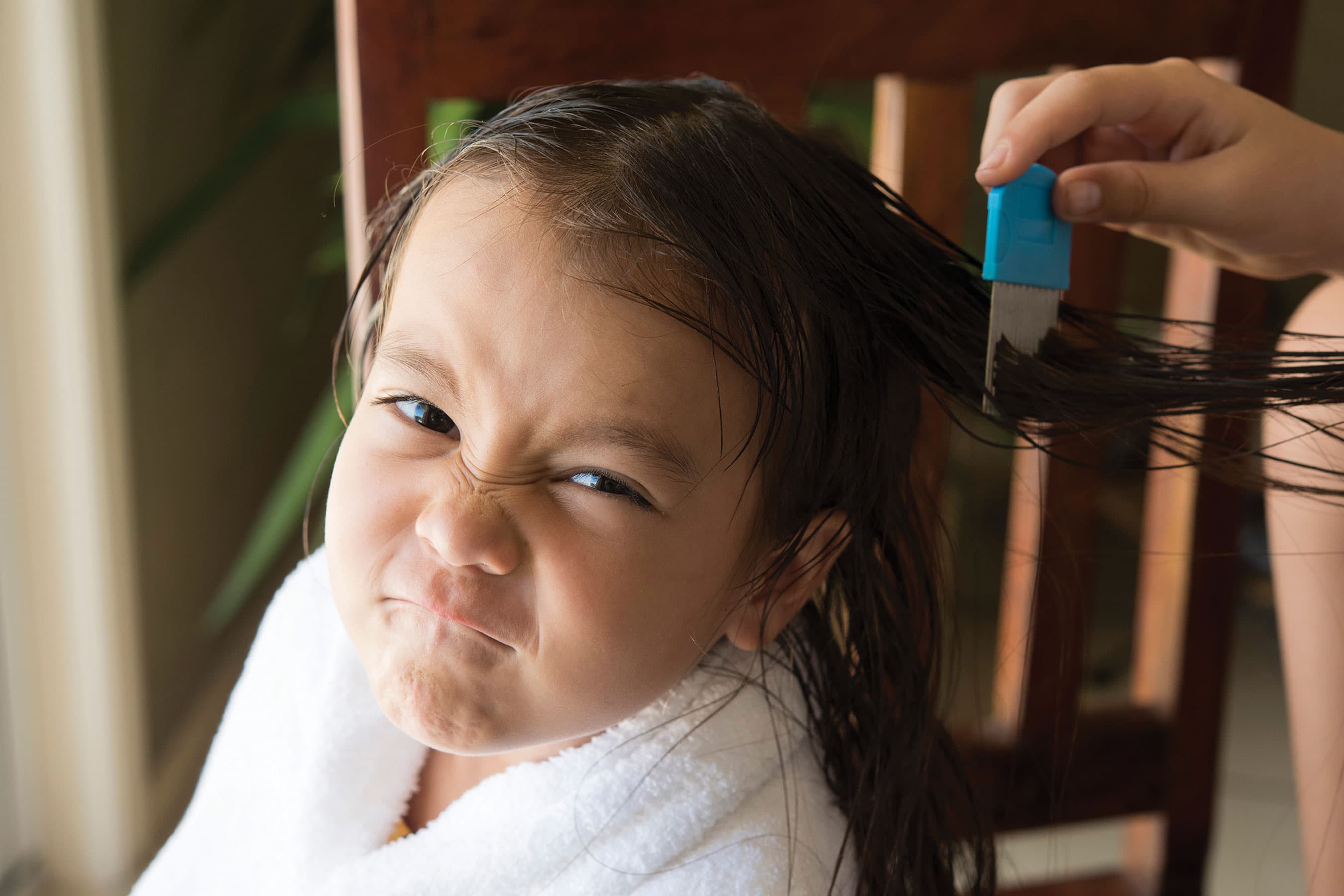
Lice in Children
July 6, 2026
Online Clinic
Children's Health
Lice are small, wingless insects about the size of a sesame seed. Lice lay up to 3 to 5 eggs a day. The eggs are called “nits.” The nits hatch in 7 to 10 days. In another 7 to 10 days, a female louse matures and begins laying her own eggs.
Head lice is a common problem in children in day-care centers and schools. They are annoying, but the are not dangerous and they don’t spread disease. They thrive on human blood and can survive longer than 30 days. In general, head lice can’t survive longer than 24 hours off their human host. Lice can also infest areas of the body other than the scalp. This is called body lice. Lice on the hair around the groin is called pubic lice.
Signs & Symptoms
- Nits can be seen on the hair. They are small yellowish-white, oval-shaped eggs that look like dandruff. Instead of flaking off the scalp, they stick firmly to the base of a hair shaft.
- Itching of the scalp is intense.
- Small, red bumps appear on the scalp and neck.
- When hatched, head lice are clear in color, so are hard to see.
Causes
Head lice does not imply poor hygiene. It is caused by the spread of the insects through direct contact of the hair or head with someone who has head lice. Sharing hats, towels, combs, helmets, etc. with an infected person can spread lice. Using pillows, head rests, etc. that an infected person used may also spread lice. Head lice don’t fly or jump, so can’t be spread through the air.
Treatment
Ask your child’s doctor about safe and nontoxic methods to treat lice. He or she may advise using an over-the-counter or prescribed medicine. Use the product as directed.
Triage Questions
Does the child have any of these problems?
- Open sores are on the head from scratching.
- Lice or nits are found in the child’s eyebrows, eyelashes, hair, or skin.
- Red bite marks are seen on the scalp. The child’s head itches. Lymph glands in the child’s neck are swollen.
- With lice, the child has a chronic illness like asthma, cancer, epilepsy, etc. Or, the child is under 2 years old.
Self-Care
Check everyone in your home for lice and nits. Treat only those who have lice. Lice-killing products won’t prevent lice.