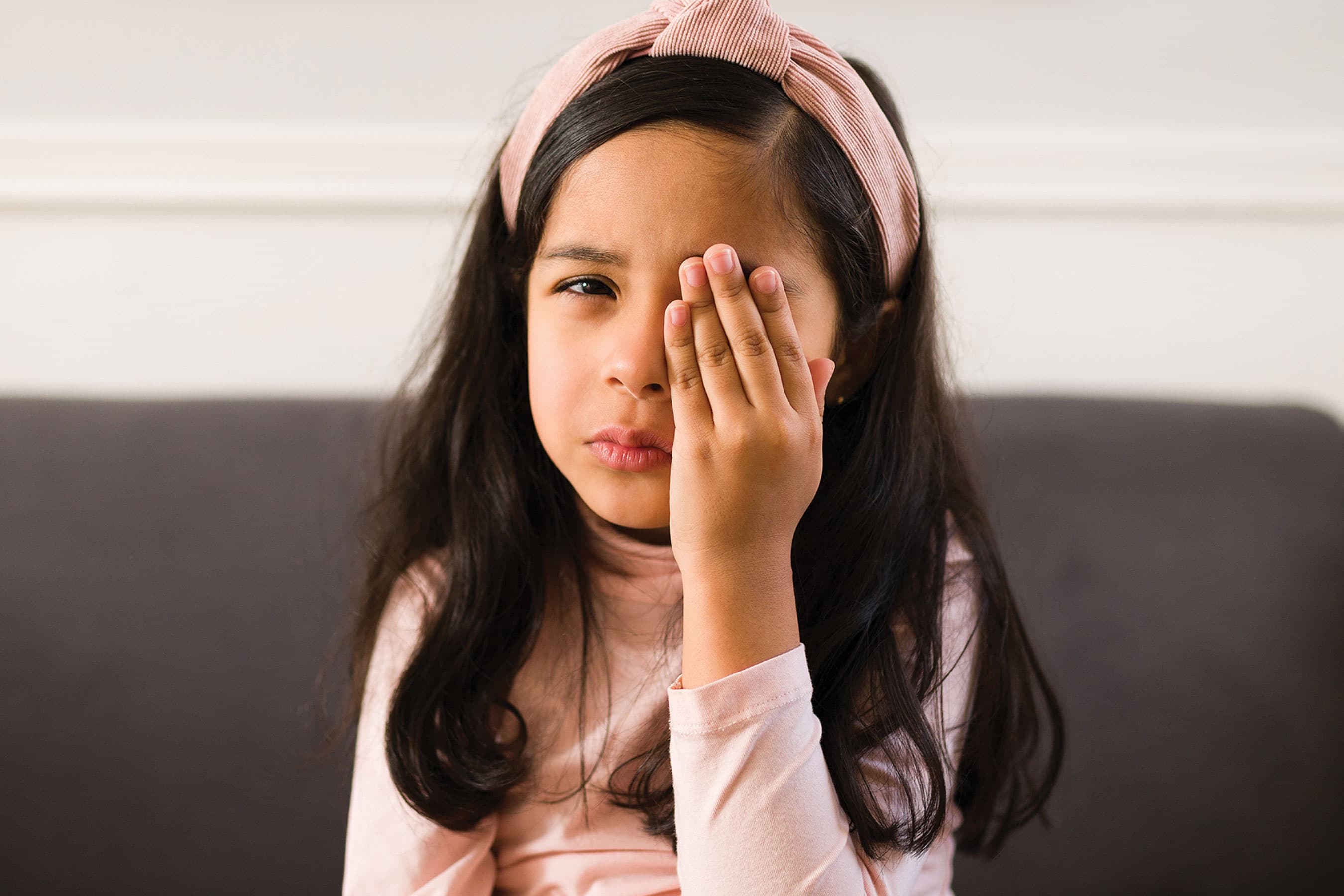
There are many kinds of eye problems that children get.
Types of eye conditions
Blocked tear ducts. Tears made by the eye can’t drain into the tear ducts if they are blocked. The baby’s eyes water even when the baby is not crying. This usually happens to babies up to 2 months old. Most blocked tear ducts open up by the time the child is 1 year old.
Crossed eyes. Often, this problem goes away with no, or early, treatment.
Swelling and pain inside the eyelids and on the whites of the eyes. This is called conjunctivitis. There are many kinds of conjunctivitis. Pinkeye is one kind. It is an infection. Other infections, chemicals, allergens, or things that get in the eye can also cause conjunctivitis.
Drooping eyelid over part of the eye. This is called ptosis. It is usually caused by weak nerves in the eye lid. Your child can be born with it. Or it can happen with another muscle problem.
Stye. This is an infection on the eyelid. It looks like a pimple. Most sties go away with home treatments.
Vision problems. Here are a few examples:
Nearsightedness (can’t see things far away)
Farsightedness (can’t see things close up)
Astigmatism (blurry vision from an eye that is not shaped right, or from losing an eye)
Diagnosis
Babies and children should have their eyes checked as part of their well child visits with their pediatrician. They will check for vision problems in the child’s developing eyes.
Starting at age 3, your child should have a visual acuity test. This involves your child looking at details of letters or symbols from a set distance.
Take your child for another eye exam before he or she starts school.
Watch for problems at any age. Look for changes in the eyes, eyelids, or the skin around the eyes.
Self-Care
A doctor should treat a hurt or infected eye. But you can treat some eye problems at home.
For dry eyes, try over-the-counter “tears.” Wash your hands before you put drops in the eyes. If your child’s eyes don’t get better, take him or her to the doctor.
To help with an insect bite, gently wash the eyes with warm water.
Blocked tear duct:
1. Wash your hands.
2. Press gently on the inner corner of the eye with a cotton swab. Press up, not down, for a few seconds to a few minutes.
Help the pain of a hurt eye that is not infected:
Put a warm (not hot), wet wash cloth on the eye for 5 minutes. Do this 2 or 3 times a day.
Use over-the-counter eye drops.
Don’t let your child wear contact lenses or makeup until the eye is better.
Eye is infected:
Wash your hands and your child’s hands every time you touch the eye. (Pinkeye is very easy to catch.)
Don’t share a towel with someone who has pinkeye.
Keep your child away from light if he or she got pinkeye from the measles.
Don’t cover the eye. This can make the infection worse.
How to get something out of your child’s eye:
Make sure you can see the speck before you try to get it out.
1. Wash your hands.
2. Drip clean water into the eye to rinse it.
3. Twist a piece of tissue at each end. Wet the tip with tap water, not spit. Gently touch the speck with the tip. The speck should stick to the tip.
Tell your child to look down if the speck is under the upper lid. Gently pulling on the eyelashes, pull the upper lid away from the eye. When you can see the speck, try to touch it with the tissue.
Don’t rub the eye. And never use anything sharp to touch your child’s eye.
4. Wash the eye with cool water.
Help with pain from a stye:
Put a warm wash cloth on the stye 3 or 4 times a day for 5 or 10 minutes each time.
Keep your child away from dust and dirt that can get in his or her eyes.
Don’t poke or squeeze the stye.
Triage Questions
Question 1
Does your child have any of these problems?
The eye was injured.
Something got in the eye and hurt it badly.
One eye is drooping after your child hurt his or her head.
Eyes can’t open because the eyelids droop so much.
There is blood in the pupil of the eye. (The pupil is the dark spot in the middle of the eye.)