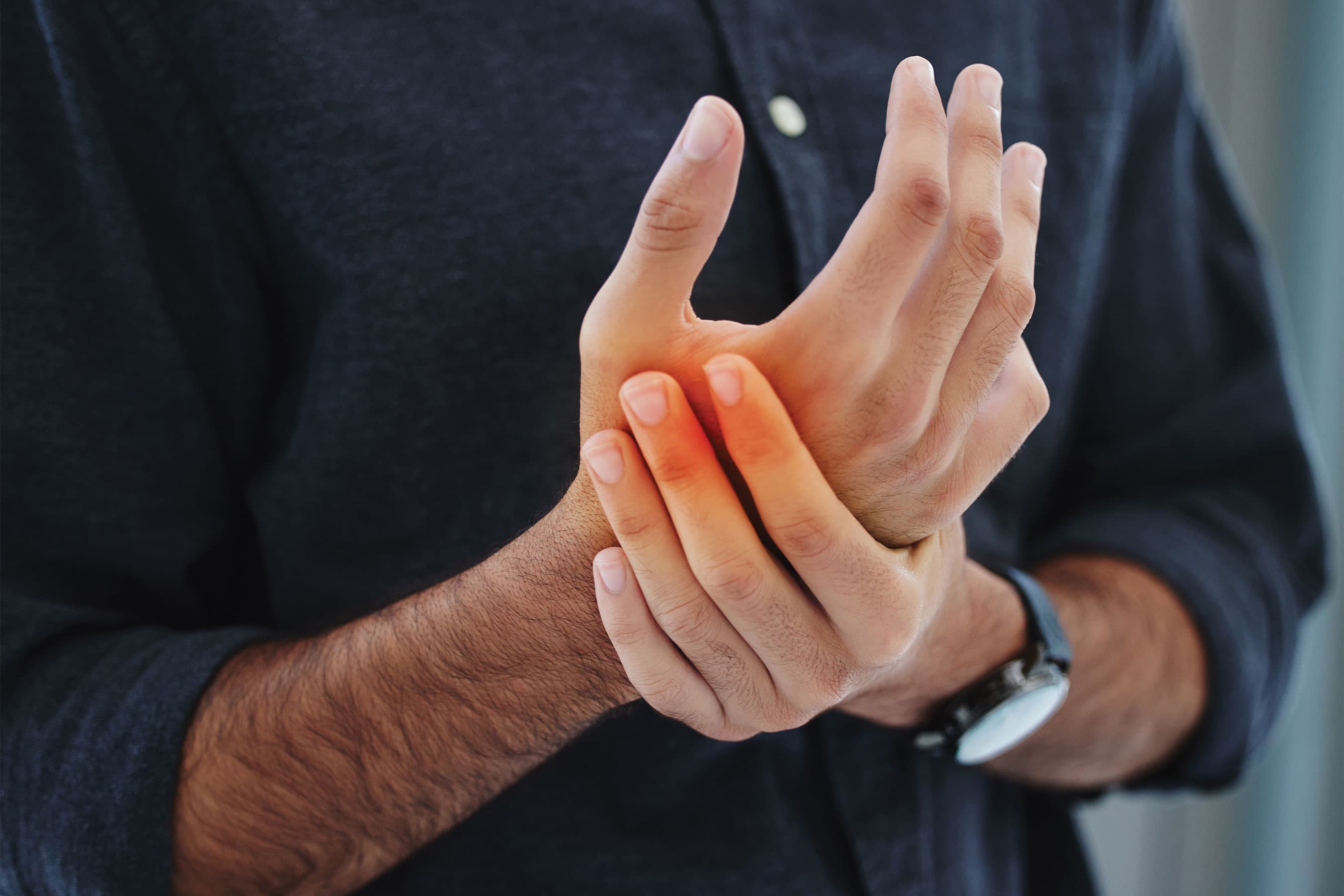
Pain ranging from dull to severe. Increased pain with movement.
Numbness
Weakness
Tenderness
Stiffness
Swelling
Causes
There are many causes of arm and/or hand pain.
Common causes are:
Arthritis
Repetitive motion injuries (RMIs), such as carpal tunnel syndrome
Tendonitis
Circulation problems, such as angina and a heart attack
Skin rashes. Skin wounds. Infections.
Injuries, such as sprains, strains, and broken or dislocated bones
Treatment
Treatment depends on the cause and how severe the problem is.
A bone sticks out or bones in the injured area make a grinding sound.
The injured body part looks crooked or the wrong shape.
After a crushing injury, pain increases.
You can’t move the injured body part or put weight on it.
The injured area is blue, pale, numb, or feels cool, but the same limb on the other side of your body does not.
Burning pain in a finger, especially at night and/or when you bend your wrist and fingers upward then downward
Shooting pains from your hand to your wrist and sometimes to your forearm
Numbness and tingling in your first 3 fingers and thumb
Hand pain, numbness, and tingling for more than 2 weeks
You haven’t been able to make a fist for over a week.
Your shoulder hurts, is stiff, and is hard to move.
You have pain, tenderness, and limited motion in your shoulder, arm, or hand.
Tenderness and pain over an elbow
Pain when you twist your arm or hand, such as when you use a screwdriver or play tennis or pickleball
A weak grip
Any sign of an infection
Puffiness, hardening, and thickening of the skin
Your skin looks shiny or waxy or blue in color.
Coldness and numbness
A growth on your wrist that feels tight, hard, and painful
Your hands turn pale, then red, and get painful and numb when exposed to the cold and/or when you are stressed.
Pain in your arm or hand wakes you from your sleep.
Self-Care / Prevention
Help Treat Arthritis
Follow your doctor’s advice for exercise, medications, and the use of supplements.
Follow a healthy diet. If you are overweight, lose weight gradually (1-2 pounds a week). Losing weight too fast and fasting raise uric acid levels and increase the risk for gout.
Protect your joints from injuries. Wear knee pads, etc.
Don’t put too much stress on your joints. Take regular pauses and breaks from activities that do this.
Help Prevent Osteoarthritis
Get to and stay at a healthy weight.
Do regular physical activity, but don’t overdo it. If you feel pain, stop.
Prevent falls and sports injuries.
Quit smoking if you smoke.
Carpal Tunnel Syndrome (CTS)
This is much easier to treat and less likely to cause future problems if it is found early. Once CTS is diagnosed, treatment includes:
Wearing a wrist brace, splint, etc. as advised by your doctor. This may need to be worn during the day and while you sleep.
Taking OTC medicines to reduce pain and swelling.
Physical therapy
Occupational therapy
Cortisone shots in the wrist area
Surgery, if needed
For More Information:
Arthritis Foundation
arthritis.org
National Institute of Arthritis and Musculoskeletal and Skin Diseases (NIAMS)